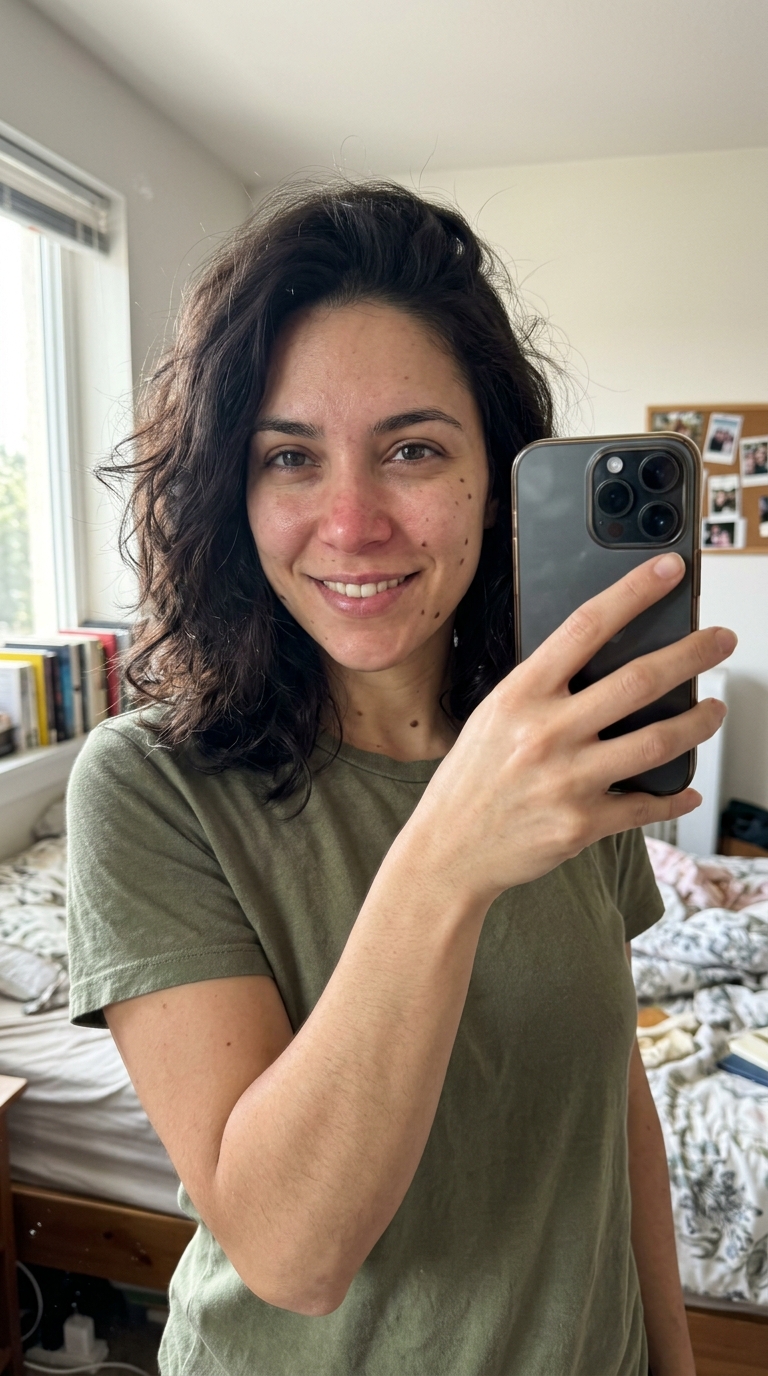
How MaxAura reads your face
A professional color and style consultation runs on markers: measurable cues an analyst reads from your face before recommending anything. MaxAura reads the same markers from one photo, in about a minute.
This page shows you exactly what we look at, what the numbers in your report mean, and what a good photo changes — no mystery, no black box.
Three studies, one photo
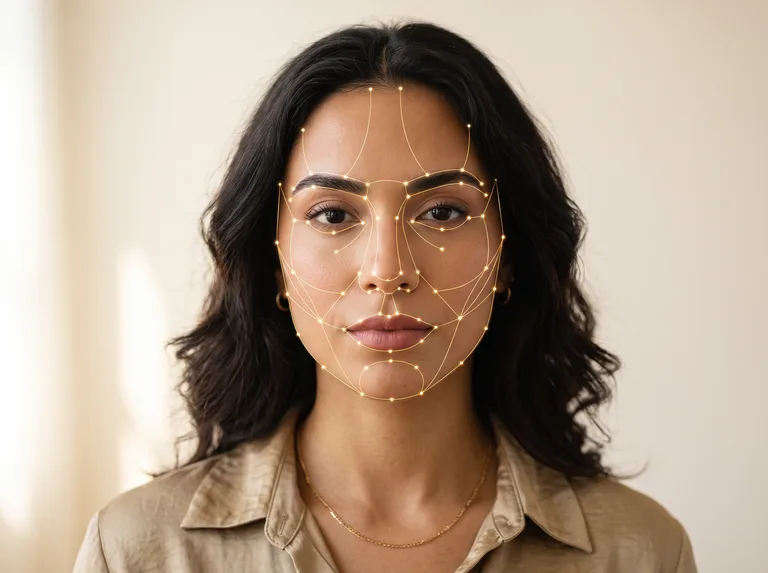
Every MaxAura report is built from three families of markers. Each one is something you could measure in a mirror with enough time and training — we read them in seconds.
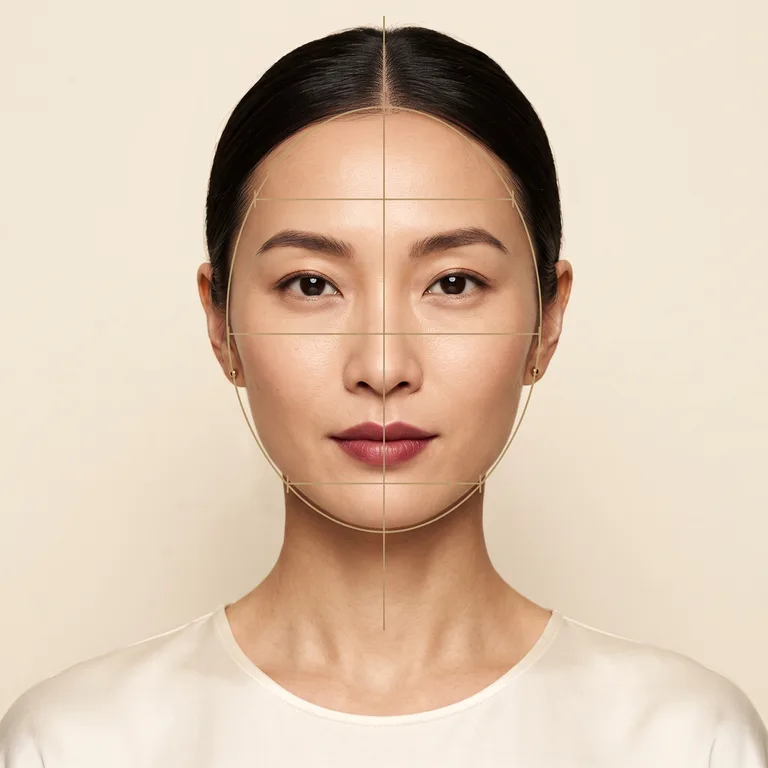
Measurements, not opinions
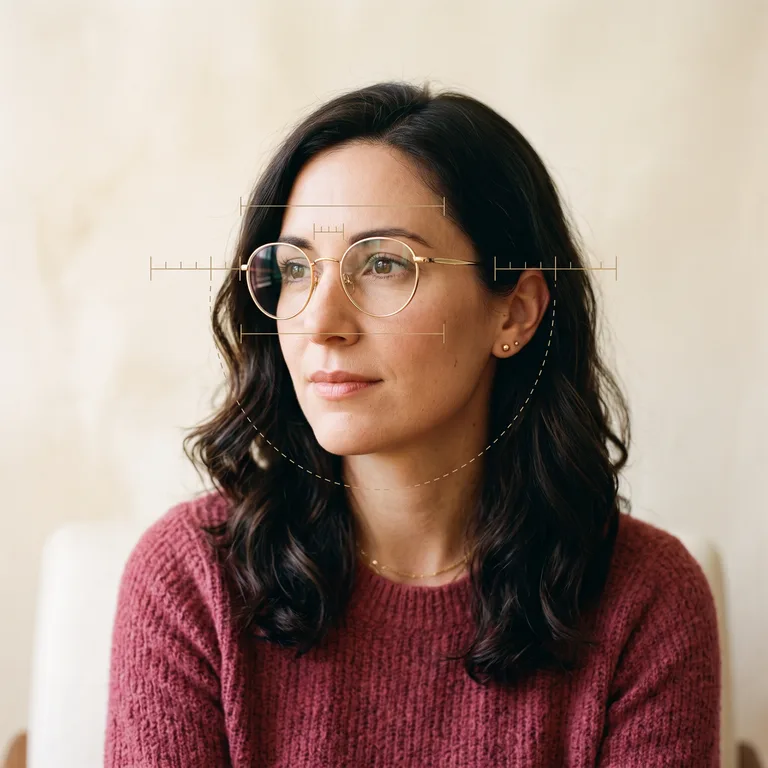
Your face shape is a set of measurements: the ratio of face length to cheekbone width, how your jaw width compares to your forehead, and the angle of your jawline. MaxAura maps these points on your photo and reads the ratios — the same way a stylist holds up a tape measure, but in seconds.
Those ratios place you among the classic shape families — oval, round, square, heart, oblong — and shape the haircut and frame ideas that follow.
- Face length : cheekbone width ratio
- Jaw width vs forehead width
- Jawline angle — soft curve to defined corner
- Where your face carries its widest point
The temperature beneath your skin
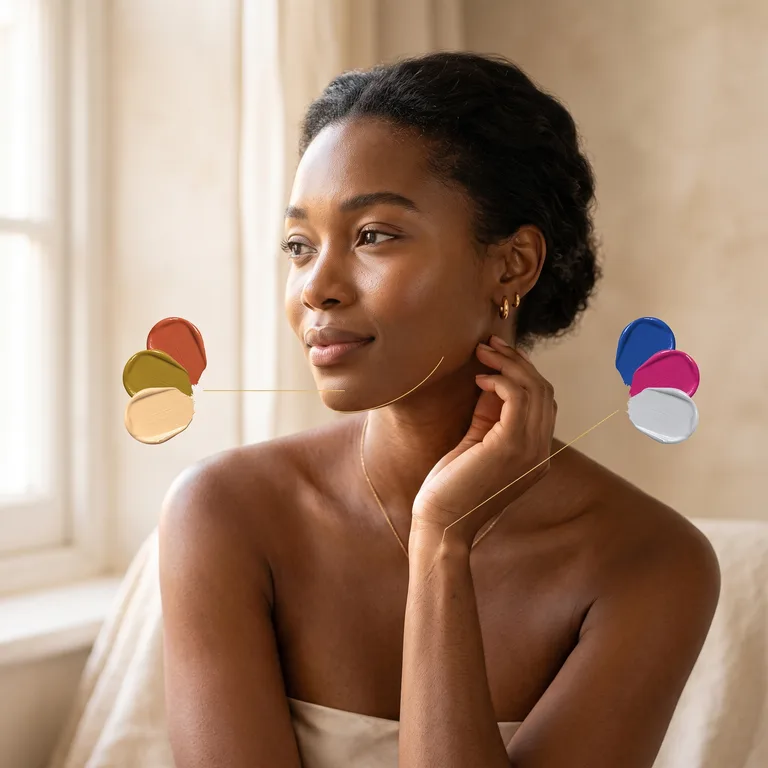
Undertone is the subtle cast under your skin’s surface — golden-warm, rosy-cool, or neutral in between. It never changes with a tan, and it decides which colors look most natural next to your face. MaxAura reads it directly from your photo, alongside the natural depth of your hair and the clarity of your eyes.
The second marker is contrast: how much your features step apart from each other in lightness and depth. Undertone sets the temperature of your palette; contrast sets how bold it can go. Together they place you in your color season.
- Skin undertone — warm, cool, neutral, or olive
- Contrast level between hair, skin, and eyes
- Natural depth — light to deep
- Clarity — bright and clear vs soft and muted
What sits well on your frame
Great glasses and a great haircut have the same job: to work with the face you have. MaxAura compares frame width to your cheekbone width, checks where a bridge sits against your nose line, and reads how hair length and volume shift the visual weight of your face.
That’s why the recommendations are specific — not "try a bob," but which lengths, volumes, and frame families work with your face shape.
- Frame width : cheekbone width
- Bridge placement against the nose line
- Hair volume and length vs face shape
- Visual weight — where a style adds or removes it
What the numbers mean
Photo quality is about your photo, not your face. A high score means the markers were easy to read — good light, clear detail, a frontal angle. A lower score means the photo limited what we could measure, and the honest move is to retake it, not to squint harder.
Rankings order recommendations by how well they fit your markers — never by what’s trendy or what anyone paid to promote. A “best match” frame family simply agrees with your geometry more than the alternatives do.
And a plain-language limit: markers are measurable; taste isn’t. MaxAura tells you what works with your face shape and coloring. Whether you wear it is a style choice — yours.
A good photo is half the analysis
Every marker above is read from pixels. Give the analysis honest pixels and it gives you an honest answer — MaxAura checks your photo first and tells you if something will limit the read.
Helps the read
- Natural daylight, facing a window
- Camera at eye level, face straight on
- Hair pulled back off your face
- No filters, no heavy makeup
Throws it off
- Warm bulbs or colored party lighting
- Strong head tilt or a profile angle
- Beauty filters and skin smoothing
- Low-resolution or blurry shots
Photos are stored securely and privately in your account so your style history works. They are never sold, shared with third parties, or used to train AI models — and you can delete them, or your entire account, at any time. The full detail lives in our Privacy Policy.
The method itself keeps improving. When we refine how a marker is read or add a new one to your report, we note it here — most recently in July 2026, when the skin undertone readout was added to every color analysis and this method page was published.
Honest answers
How accurate is MaxAura?
On measurable markers — face shape, undertone, contrast — results are highly consistent when your photo is clear, frontal, and taken in natural light. Style recommendations built on those markers are guidance based on established styling frameworks, not a clinical assessment. When photo quality limits what we can read, your report says so.
Why did my result change between two photos?
Because the markers changed, not your face. Warm indoor lighting can shift how your undertone reads, a tilted head changes the face-shape measurements, and filters smooth away the detail the analysis relies on. Two well-lit, frontal, unfiltered photos should land on the same result.
Is my photo stored?
Your photos are stored securely and privately in your account so your style history works. They are never sold, shared with third parties, or used to train AI models — and you can delete them, or your whole account, at any time.
Is this professional or medical advice?
No. MaxAura applies the same frameworks professional color analysts and stylists use — seasonal color theory, face-shape styling, frame-to-face fit — instantly and affordably. It is style guidance, not medical, dermatological, or psychological assessment.