Seasonal Color Analysis: How to Find Your Color Season
Seasonal color analysis finds the colors that look most natural on you. Here's how the Spring, Summer, Autumn, and Winter system works — and how to find yours.
You've probably noticed that some colors look effortless on you while others never quite feel right. That isn't coincidence or imagination — it's color science.
Seasonal color analysis is a method for identifying your personal color palette based on the undertone and depth of your natural coloring: skin tone, eye color, and hair color. The system divides people into four seasonal categories — Spring, Summer, Autumn, and Winter — each with a distinct set of flattering colors.
Understanding your color season can change the way you shop, dress, and even how others perceive you.
What Is Color Season?
The concept was popularized by color theorist Carole Jackson in the 1980s, though the underlying color theory dates back much further. The core principle is that people's natural coloring has specific characteristics — warm or cool undertones, high or low contrast, muted or clear intensity — and that colors with matching characteristics will harmonize with their appearance.
The four seasons map to these characteristics:
- Spring — warm undertones, light to medium depth, clear and bright
- Summer — cool undertones, light to medium depth, soft and muted
- Autumn — warm undertones, medium to deep depth, muted and earthy
- Winter — cool undertones, medium to deep depth, clear and high contrast
Understanding Undertones
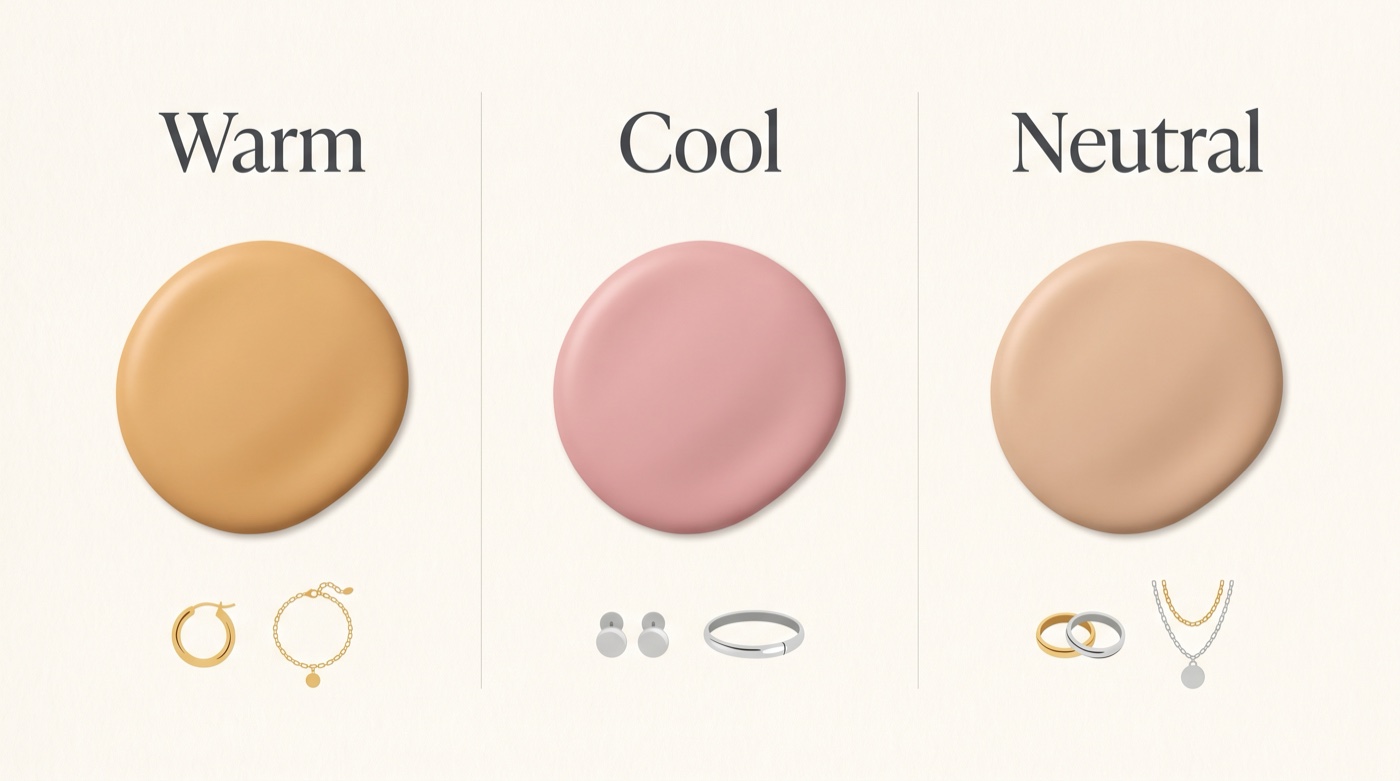 Warm, cool and neutral skin undertones in seasonal color analysis
Before determining your season, it helps to understand undertones.
Warm undertones have a golden, peachy, or yellow quality beneath the skin. The veins on your inner wrist may appear more green than blue. Gold jewelry tends to look better than silver.
Cool undertones have a pink, red, or bluish quality. Veins tend to appear more blue or purple. Silver jewelry often looks more harmonious than gold.
Neutral undertones sit between warm and cool — both gold and silver work equally well.
The Four Seasons Explained
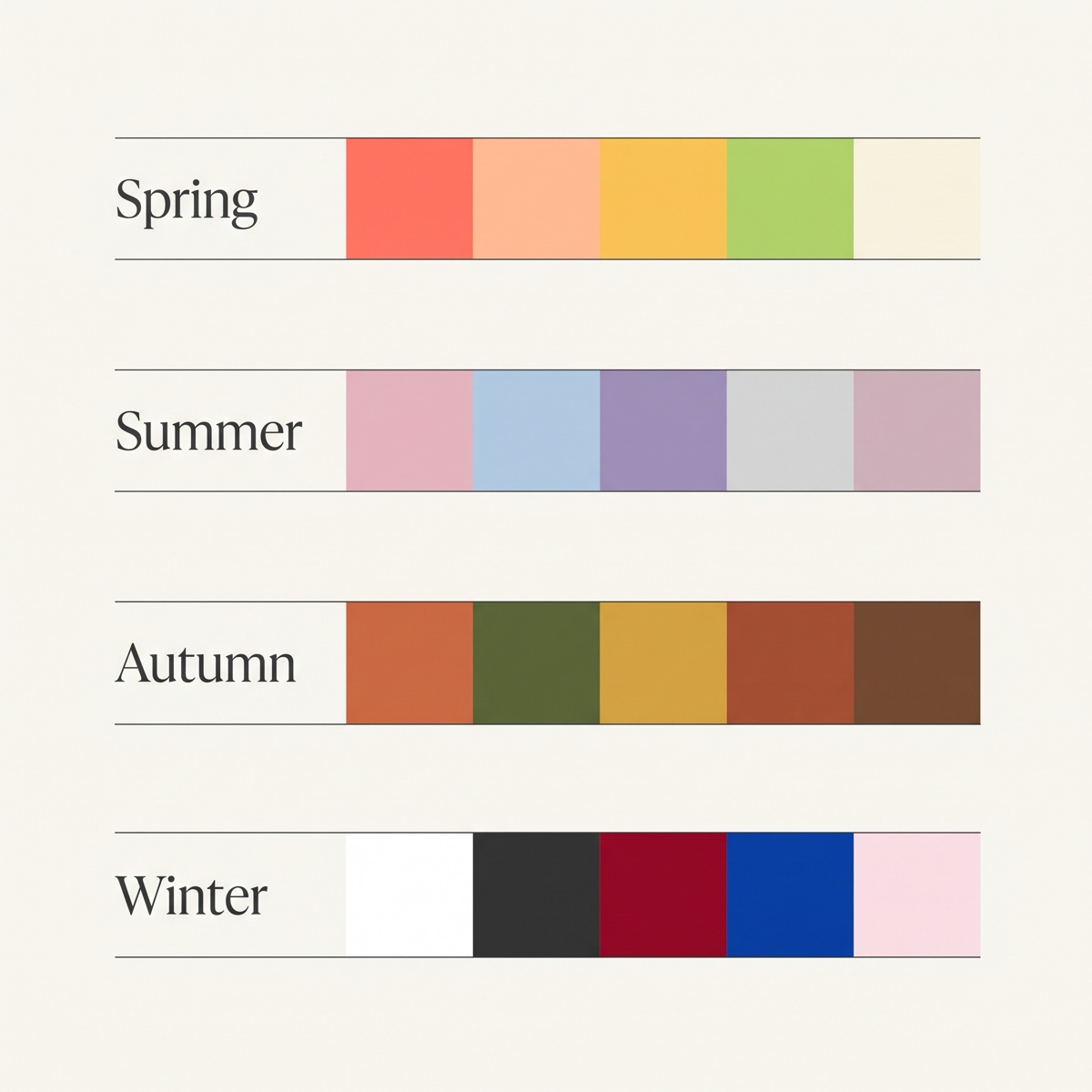 Spring, Summer, Autumn and Winter seasonal color palettes
In the 12-season system, each family splits into three seasons named for their strongest quality. You can browse all 12 color seasons with their palettes and hex codes.
Spring
Spring types have warm undertones combined with relatively light, clear coloring. The overall impression is fresh and golden.
Typical characteristics: peachy or golden skin, light to medium hair (blonde, auburn, light brown), blue, green, or hazel eyes that are clear and bright.
Spring's best colors: Warm, clear, and light — coral, peach, golden yellow, warm greens like lime and grass, ivory, camel, turquoise. Think of a fresh spring meadow.
Save for accents: Cool, heavy tones — black, dark navy, icy pastels, burgundy. They look great a little further from the face.
Summer
Summer types have cool undertones with soft, muted coloring. The overall impression is delicate and blended.
Typical characteristics: pink or rosy skin, ash-toned hair (ash blonde, light ash brown, possibly gray), eyes that are blue, gray-blue, or soft gray-green.
Summer's best colors: Cool, soft, and dusty — soft rose, lavender, dusty blue, powder blue, mauve, soft teal, silver gray. Think of a hazy summer sky.
Save for accents: Warm, intense colors — orange, bright yellow, warm brown, golden tones.
The muted end of this family has a full guide: the Soft Summer color palette.
Autumn
Autumn types have warm undertones with deep, muted, earthy coloring. The overall impression is rich and complex.
Typical characteristics: warm, golden, or coppery skin, hair that is warm brown, dark auburn, red, or copper, eyes that are brown, hazel, or warm green.
Autumn's best colors: Warm, earthy, and muted — olive, burnt orange, rust, terracotta, mustard yellow, deep teal, warm brown, forest green. Think of fall foliage.
Save for accents: Cool, icy, or highly saturated colors — hot pink, electric blue, high-contrast black and white.
Two Autumn seasons have full guides: the Soft Autumn color palette and the Deep Autumn color palette.
Winter
Winter types have cool undertones with high contrast and clear, intense coloring. The overall impression is striking and dramatic.
Typical characteristics: cool-toned skin (either very fair or deeper tones), dark hair (black, dark brown), eyes that are dark brown, black, deep blue, or gray with clear definition.
Winter's best colors: Cool, clear, and dramatic — pure white, true black, icy pastels, jewel tones like sapphire blue, emerald green, deep burgundy, fuchsia. Think of crisp winter light on snow.
Save for accents: Warm, muted, or earthy tones — camel, warm brown, orange, golden yellow.
The deepest Winter has a full guide: the Deep Winter color palette.
How to Identify Your Season
 Color draping to identify your seasonal color palette
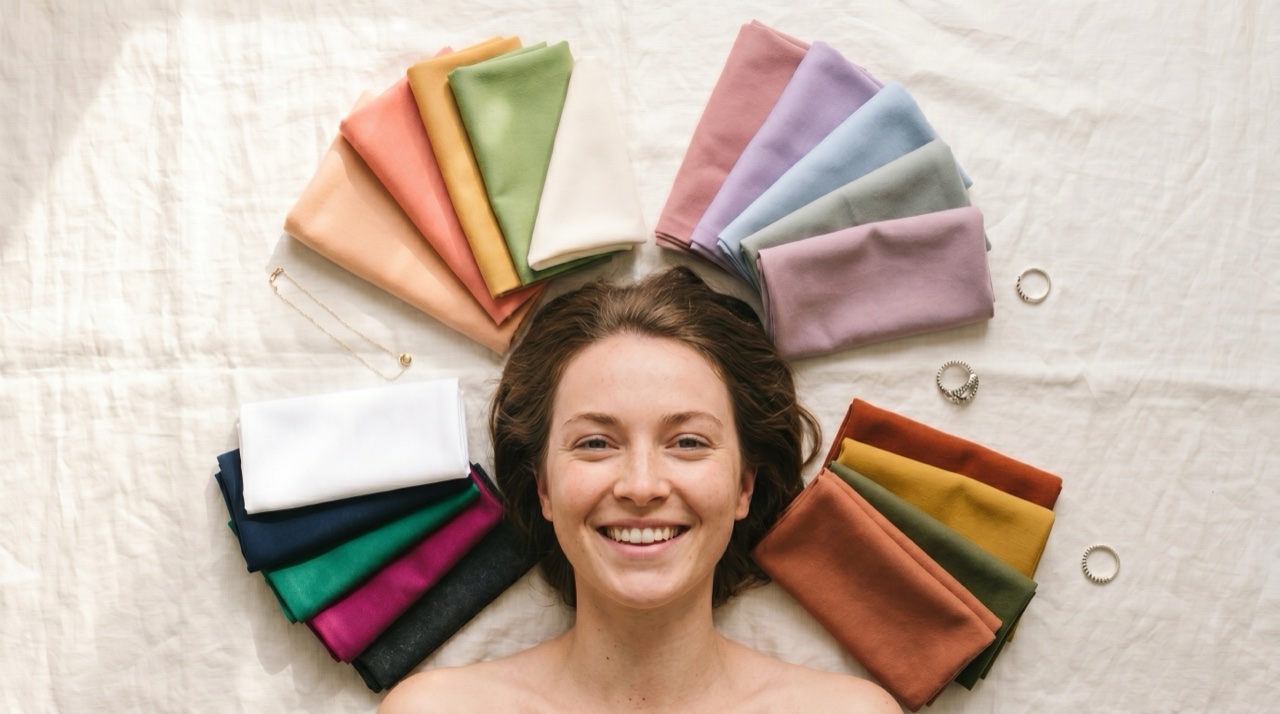
The classic draping test involves holding swatches of warm and cool colored fabric near your face in natural light and observing which makes your skin look clearer, healthier, and more even-toned.
Practical self-assessment:
- Remove makeup and pull hair back to see your natural coloring
- Go to natural light (not fluorescent lighting)
- Hold gold fabric near your face, then silver — which looks better?
- If gold looks better, you're likely warm (Spring or Autumn). Light and clear = Spring, deep and muted = Autumn
- If silver looks better, you're likely cool (Summer or Winter). Light and soft = Summer, deep and high contrast = Winter
Why Your Color Season Changes Everything
Wearing your season's colors means the colors of your clothes harmonize with your skin, hair, and eyes rather than competing with them. The effect is that your complexion looks clearer, your features more defined, and you look more naturally healthy.
For practical wardrobe building, knowing your season simplifies decision-making enormously. Instead of standing in a store wondering if a color "works," you have a clear framework.
Get Your Color Season Instantly
Manual draping tests require good lighting, colored fabric swatches, and ideally a second person to assess. MaxAura AI's color analysis uses your photo to identify your skin undertones, hair depth, and eye color, then maps your characteristics to your seasonal color palette — along with specific color recommendations for clothing, accessories, and makeup.
Curious about your season? Upload a photo to MaxAura AI and get your complete seasonal color analysis in seconds.